
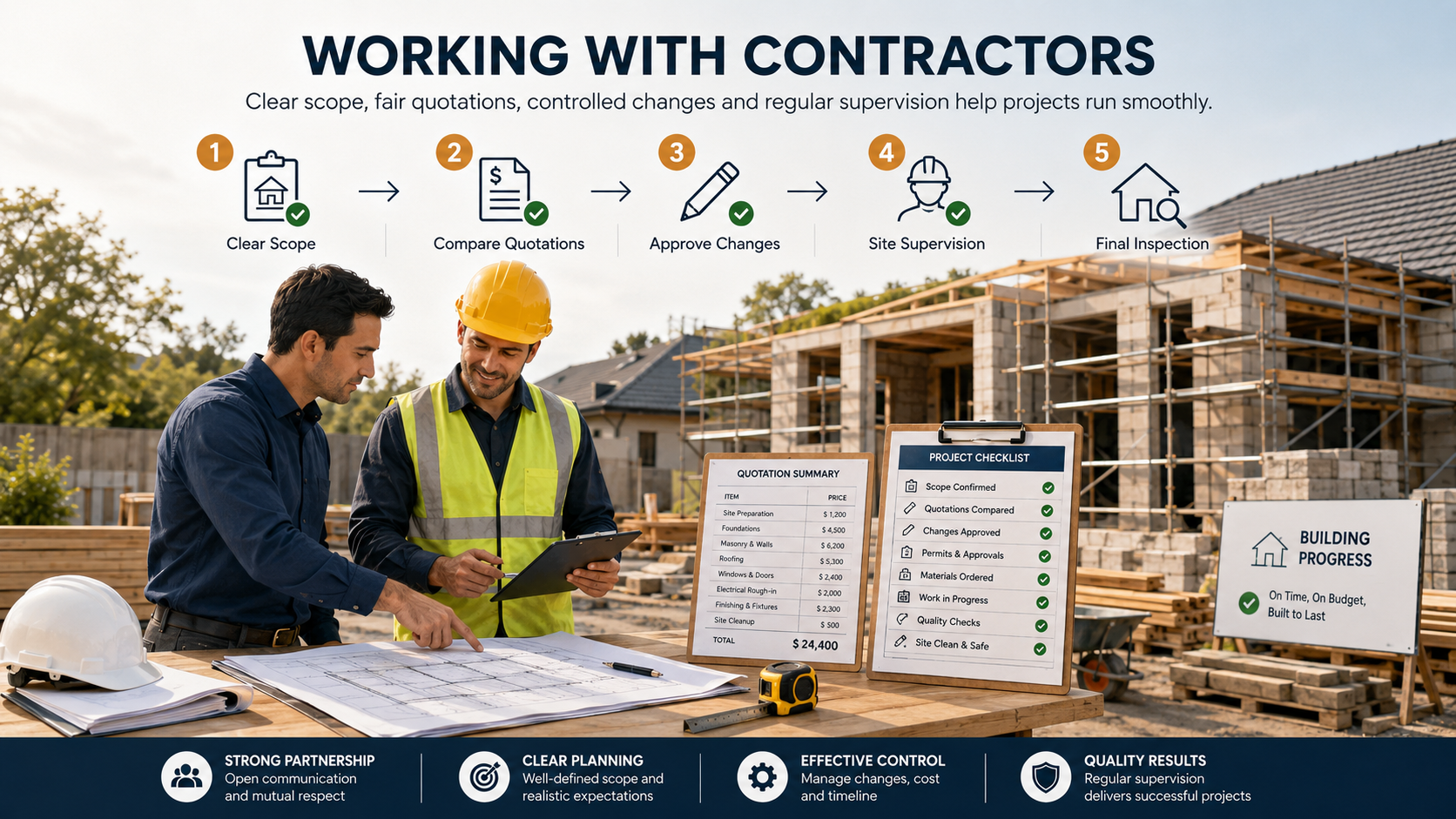
Working with contractors may seem straightforward: define the job, request a quotation, and begin construction. In reality, many project problems come from misunderstandings between the project owner and the contractor.
A clear Scope of Work, detailed quotations, proper control of additional work, and regular site supervision can help reduce budget overruns, delays, and work that does not match what was originally agreed.

📋 1. Define a Clear Scope of Work
Before asking contractors for quotations, clearly define what you expect them to do.
A Scope of Work should include important details such as:
✓ Project size and dimensions
✓ Type of materials
✓ Structural or concrete work
✓ Painting and finishing work
✓ Electrical, plumbing, or drainage work, if required
✓ Site cleanup after completion
✓ Expected project timeline
For example, instead of simply writing:
“Build a roof extension.”
Specify the size of the roof, the type of structure and materials, and whether painting, concrete foundations, or other related work are included.
💡 The clearer the Scope of Work, the lower the chance of misunderstandings later..
💰 2. Review and Compare Quotations Properly
Do not select a contractor simply because they offer the lowest price.
Instead, check exactly what is included in the quotation, such as:
- Labor
- Materials and material specifications
- Transportation
- Equipment or machinery
- Installation and finishing
- Project timeline
- Payment terms
If you are requesting quotations from multiple contractors, provide each contractor with the same Scope of Work.
This allows you to compare quotations fairly.
A contractor with a lower price may not actually be cheaper—they may simply have excluded certain items that another contractor has included.
Instead of asking:
“Which contractor is cheaper?”
Ask:
“Are both contractors quoting for the same work, materials, and responsibilities?”

🔄 3. Control Additional Work With Change Orders
Changes often happen during construction.
You may decide to add work, site conditions may be different from expected, or additional work may become necessary.
For example, the original project may include a roof extension, but later you may decide to add a drainage channel or additional concrete work.
These changes should be documented through a Change Order, or at least confirmed in writing.
A Change Order should clearly state:
✓ What is being added or changed
✓ How much the cost will increase or decrease
✓ What materials will be used
✓ Whether the change affects the project timeline
✓ Who approved the change
⚠️ Whenever possible, agree on the details and cost before the additional work begins.
Small verbal requests can quickly add up and become a much larger expense by the end of the project.
👷 4. Supervise the Site Regularly
Site supervision is not simply visiting the site to see whether workers are working.
The real purpose is to check whether the work being completed matches what was agreed.
Regular site inspections should include:
🔨 Workmanship — Is the installation being completed properly?
📐 Dimensions — Does the work match the approved measurements and drawings?
🧱 Materials — Are the correct materials and specifications being used?
⏱️ Progress — Is the project moving according to schedule?
🦺 Safety — Is the construction area being managed safely?
🔄 Changes — Has anything been modified without approval?
Problems identified early are usually easier and less expensive to correct than problems discovered after construction is complete.

📸 5. Keep Records and Track Progress
Keep important project documents and records, including:
📌 Scope of Work
📌 Approved quotations
📌 Drawings and material specifications
📌 Change Orders
📌 Payment records
📌 Site progress photos
Taking photos before, during, and after construction is one of the simplest ways to track progress.
It is especially important to photograph work that will later be covered, such as electrical wiring, plumbing, foundations, or structural connections.
These records can be extremely helpful if questions or problems arise later.
✅ 6. Link Payments to Milestones and Inspect Before Completion
Avoid paying a large portion of the project cost before significant work has been completed.
A better approach is to link payments to clear project milestones, for example:
1️⃣ Deposit before work begins
2️⃣ Payment when materials arrive on site
3️⃣ Payment after structural work is completed
4️⃣ Payment after installation is completed
5️⃣ Final payment after inspection and corrections
Before making the final payment, inspect the entire project and prepare a Punch List of any unfinished or incorrect items.
This may include:
☐ Paint touch-ups
☐ Installation issues
☐ Cleanup
☐ Electrical or drainage testing
☐ Work that does not match the agreed Scope
Once these items have been corrected, the project can be formally completed and the final payment released.

🤝 How to Build a Better Working Relationship With Contractors
Good contractor management does not mean controlling every small action on the job site.
It means creating a clear system so that everyone understands the project from the beginning.
A simple process to remember is:
📋 Clear Scope
→ 💰 Compare Quotations Properly
→ 🔄 Control Changes With Change Orders
→ 👷 Supervise the Site Regularly
→ ✅ Inspect Before Final Payment
When the scope, price, and responsibilities are clearly defined, the risk of unexpected costs, delays, and misunderstandings between the project owner and contractor can be significantly reduced.
🏗️ Good construction management begins before construction starts—with clear expectations, good communication, and proper documentation.
Leave a Reply