
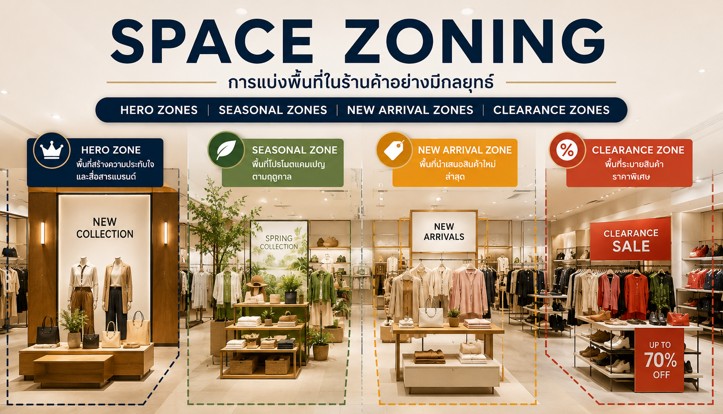
Walk into any successful retail store and you may feel that products are simply placed wherever there is space. In reality, every square meter has a purpose.
📍Introduction
This strategic approach is known as Space Zoning—the practice of dividing a retail store into dedicated zones based on customer behavior, merchandising objectives, and business goals. Rather than treating the sales floor as one large display area, retailers assign different roles to different spaces, allowing each zone to maximize sales, improve navigation, and strengthen the overall shopping experience.
Whether in luxury boutiques, department stores, supermarkets, furniture showrooms, or specialty retailers, effective zoning helps customers discover products naturally while increasing average transaction value.
🏪What is Space Zoning?
Space Zoning is the strategic organization of a retail environment into functional areas, each designed with a specific commercial objective.
Each zone answers a different business question:
- Where should we introduce our brand?
- Where should we launch new products?
- Where should we promote seasonal campaigns?
- Where should discounted products be located?
- Which products deserve premium visibility?
Rather than displaying products randomly, retailers intentionally allocate floor space according to:
- Customer traffic flow
- Shopping psychology
- Product lifecycle
- Profitability
- Promotional priorities
- Store layout
Think of a retail store as a city.
Different districts serve different purposes:
- Downtown attracts attention.
- Shopping streets encourage exploration.
- Residential areas provide convenience.
- Clearance outlets offer bargains.
A well-designed retail store follows the same principle.
🗺️Why Space Zoning Matters

Retailers often focus heavily on product selection while overlooking the importance of where those products are displayed.
Research in retail merchandising consistently shows that product visibility and placement have a significant influence on purchasing decisions. Customers frequently make buying decisions inside the store rather than before entering it.
Effective zoning helps retailers:
- Increase product visibility
- Improve customer navigation
- Encourage product discovery
- Reduce shopping frustration
- Support promotional campaigns
- Increase impulse purchases
- Improve inventory turnover
- Strengthen brand storytelling
Ultimately, zoning transforms a store from a storage space into a guided customer journey.
🧭Understanding Customer Movement

Before discussing different zones, it’s important to understand customer behavior.
Most shoppers typically:
- Slow down after entering.
- Orient themselves to understand the store.
- Follow the main circulation path.
- Explore featured displays.
- Browse categories.
- Compare products.
- Make purchase decisions.
- Proceed toward checkout.
Space zoning is designed to support each step of this natural journey.
1. Hero Zone ⭐

🌟Purpose
The Hero Zone is the store’s stage.
It creates the strongest first impression and communicates:
- Brand identity
- Current campaign
- Premium products
- Signature collections
- Lifestyle inspiration
This is where retailers tell customers:
“This is who we are.”
💎Typical Location
Hero Zones are commonly found:
- Store entrance
- Power wall
- Main aisle intersection
- Front window
- Central feature display
These locations naturally receive the highest visibility.
👑Best Products for Hero Zones
Examples include:
- Best-selling collections
- Signature products
- Limited editions
- Brand collaborations
- Premium collections
- New campaign visuals
Hero Zones should not become cluttered.
Instead of displaying many products, they showcase a carefully curated story.
✨Design Characteristics
A successful Hero Zone usually includes:
- Strong visual hierarchy
- Feature lighting
- Large display fixtures
- Lifestyle styling
- Minimal product density
- Clear storytelling
Luxury brands often display only a few products while creating maximum emotional impact.
2. Seasonal Zone 🌸

🌟Purpose
etail changes throughout the year.
Seasonal Zones allow stores to respond quickly to:
- Holidays
- Festivals
- Weather
- Local celebrations
- Cultural events
These areas keep the store feeling fresh and relevant.
💎Typical Examples
Depending on the season:
🌸Spring
- Outdoor dining
- Garden collections
- Floral themes
☀️Summer
- Travel accessories
- Beach products
- Resort collections
🍂Autumn
- Home decoration
- Warm colors
- Harvest themes
❄️Winter
- Holiday gifts
- Christmas collections
- New Year celebrations
🌿Location
Seasonal Zones often appear:
- Near entrances
- Main promotional aisles
- Center displays
- Front windows
Because seasonal campaigns have limited duration, they require high visibility.
🎊Benefits
Seasonal Zones:
- Increase urgency
- Encourage repeat visits
- Refresh store appearance
- Support marketing campaigns
- Improve sell-through before season ends
3. New Arrival Zone🆕

🌟Purpose
Customers love discovering something new.
The New Arrival Zone highlights recently introduced products before they become part of regular assortments.
It satisfies shoppers’ curiosity and gives returning customers a reason to revisit.
💎Typical Products
- New collections
- Product launches
- Imported items
- Limited releases
- Trend-driven products
👑Best Location
Ideally located:
- Near entrance
- After Hero Zone
- Main customer pathway
Customers should encounter new products early in their shopping journey.
✨Design Tips
Successful New Arrival displays often feature:
- Clean presentation
- “New” signage
- Coordinated styling
- Lifestyle merchandising
- Frequent updates
Nothing reduces credibility faster than a “New Arrival” display filled with products that have remained there for six months.
4. Clearance Zone🏷️

🌟Purpose
Every retailer eventually needs to move aging inventory.
The Clearance Zone helps:
- Reduce excess stock
- Free selling space
- Improve inventory turnover
- Generate cash flow
Unlike Hero Zones, Clearance Zones focus primarily on operational efficiency.
💎Typical Products
- End-of-season inventory
- Overstock
- Discontinued products
- Packaging changes
- Last remaining sizes
- Slow-moving items
👑Best Location
Clearance areas are commonly placed:
- Rear of store
- Side aisles
- Dedicated discount section
- Near checkout (small discounted items)
Premium retailers intentionally separate clearance merchandise from premium displays to protect brand perception.
✨Design Tips
Effective Clearance Zones should:
- Remain organized
- Use clear pricing
- Separate product categories
- Maintain cleanliness
- Avoid appearing like storage areas
Even discounted products deserve attractive presentation.
🚶How These Zones Work Together
The four zones should complement—not compete with—each other.
A typical customer journey might look like this:
- Hero Zone captures attention and introduces the brand.
- New Arrival Zone sparks curiosity with the latest products.
- Category Displays support browsing and product comparison.
- Seasonal Zone highlights timely collections and promotions.
- Clearance Zone provides value-driven opportunities before checkout or at the end of the visit.
Each zone serves a distinct role, creating a seamless shopping experience while maximizing commercial impact.
🔍Common Mistakes in Space Zoning
Even well-designed stores can undermine their effectiveness through poor zoning decisions. Common pitfalls include:
- Treating every display as a Hero Zone, which dilutes visual impact.
- Leaving seasonal displays unchanged after the season ends.
- Mixing clearance items with premium collections, confusing brand positioning.
- Allowing the New Arrival Zone to become overcrowded or outdated.
- Neglecting customer traffic patterns and placing key displays in low-visibility areas.
- Failing to refresh feature areas regularly, causing shoppers to overlook them.
The most successful retailers maintain discipline in defining the purpose of each zone and update them consistently.
💰Best Practices for Effective Space Zoning

To maximize the impact of Space Zoning:
- Define a clear objective for every zone.
- Allocate prime locations to high-margin or strategic products.
- Review customer traffic patterns regularly.
- Refresh Hero and Seasonal Zones frequently to maintain interest.
- Keep New Arrival displays genuinely new.
- Ensure Clearance Zones remain tidy and easy to shop.
- Measure performance using sales per square meter, sell-through rate, conversion rate, and average basket size.
Space Zoning should evolve continuously based on customer behavior, business priorities, and seasonal opportunities.
💡Conclusion
Space Zoning is far more than arranging products on shelves—it is a strategic merchandising framework that guides how customers experience a store.
By assigning distinct roles to Hero Zones, Seasonal Zones, New Arrival Zones, and Clearance Zones, retailers can create an environment that tells a compelling brand story, introduces new products effectively, capitalizes on seasonal demand, and manages inventory efficiently. When these zones work together, they transform the sales floor into a purposeful customer journey that increases engagement, improves navigation, and ultimately drives stronger commercial results.
In today’s competitive retail landscape, the stores that perform best are not necessarily those with the most products, but those that make the smartest use of every square meter.
Leave a Reply