
Shipping personal belongings internationally involves more than arranging transportation. The items need suitable protection, an accurate inventory, and documentation that reflects their history. Golf equipment adds a practical challenge: long shafts, club heads, bags, and accessories must be organized for a journey across borders.
In this real case, Pankesum assisted a customer with shipping personal golf equipment from Chiang Mai, Thailand, to Yorktown, Virginia, USA. The shipment comprised 12 cartons of personal golf clubs, golf bags, and accessories and traveled by sea freight. The equipment had originally been brought from the United States to Thailand and was now returning to the USA.
That history shaped the documentation used in this shipment. Pankesum coordinated the shipping arrangements, packing process, and customs documentation requirements. The goods were successfully delivered to Yorktown.
Preparing and Packing 12 Cartons of Golf Equipment
Golf clubs and accessories come in different shapes and sizes. Clubs are long and relatively narrow, while heads and shafts need protection from contact and movement. With multiple cartons, a clear inventory also helps the customer and shipping team understand what is being sent.
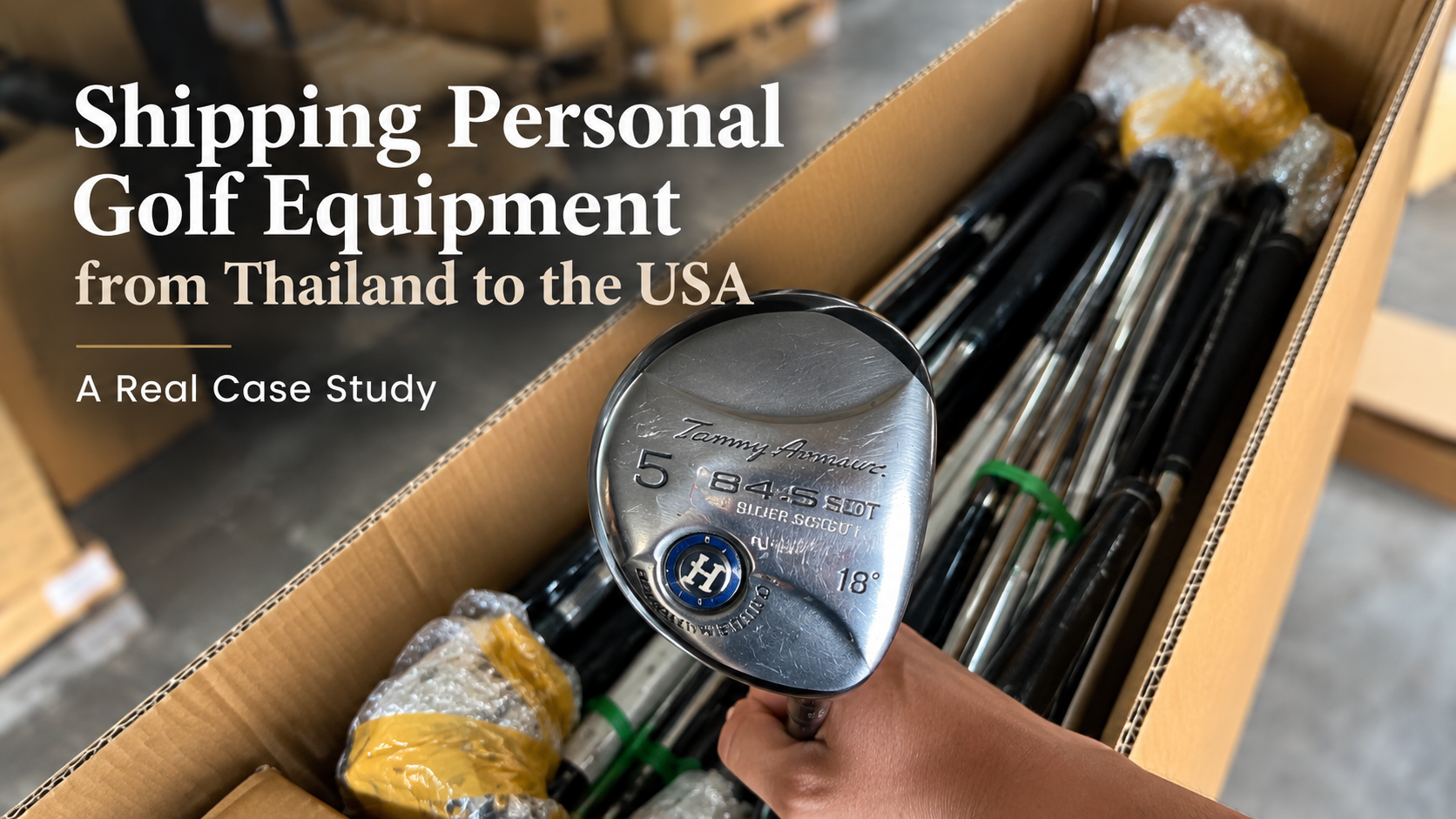
Pankesum coordinated the packing process for the customer’s 12 cartons. The shipment photographs show clubs organized inside a long cardboard box, protective wrapping around club heads, and groups of shafts secured together. Careful arrangement helps limit movement within a carton and makes equipment easier to handle during its journey.

The customer prepared a detailed inventory of the goods. An accurate list supports the documentation process and gives the parties involved a clearer picture of the contents. For anyone preparing a similar move, it helps to identify items before packing, organize them consistently, and keep the inventory aligned with the cartons.

Descriptions should reflect the actual contents and history of the goods. The information and supporting records needed for customs depend on the shipment, so it is useful to discuss them before dispatch.
Why This Shipment Required a Different Customs Process
The key distinction was the equipment’s previous journey. The customer had brought the golf equipment from the United States to Thailand and was later shipping those personal belongings back to the USA. Documentation was needed to support the goods’ previous history.
For this specific shipment, the documentation included CBP Form 3311, HTS code 9801.00.1094, and the detailed inventory prepared by the customer. CBP describes Form 3311 as a declaration for free entry of returned American products. Eligibility under a returned-goods provision depends on the facts and applicable conditions; a previous presence in the United States does not by itself establish eligibility. A CBP ruling discussing returned goods illustrates that classification and documentary requirements matter.
For comparison, Pankesum has handled other personal-goods shipments involving CBP Form 3299 and HTS code 9804.00.0500. Form 3299 concerns the declaration of unaccompanied articles for which free entry is claimed. CBP’s Form 3299 instructions explain the information requested and distinguish among types of personal and household effects.
These examples are not interchangeable rules for every shipment. The appropriate forms, classification, supporting evidence, and treatment depend on the goods and the importer’s circumstances. Customs authorities make the final determination.
Customs Documentation and Shipping Coordination
Pankesum coordinated the shipping arrangements and packing process and supported the customs documentation requirements for this case. The customer’s detailed inventory provided a record of the goods, while the documentation used reflected the shipment’s return to the United States.
Coordination matters because shipment information needs to remain consistent. A clear inventory helps identify the contents, while the goods’ history helps the relevant parties assess what supporting documentation may be needed. Starting that conversation early gives the customer time to assemble available records and clarify responsibilities.

Before shipping, Pankesum and the customer signed a written agreement confirming that the customer would be responsible for any import duties or taxes assessed upon arrival in the United States. The agreement established responsibility for potential charges; it did not guarantee whether a particular charge would be assessed.
Pankesum also offers customs clearance and import-export documentation support for customers who need assistance navigating shipment paperwork.
Shipping Golf Equipment by Sea Freight
The customer’s golf equipment traveled from Thailand to the United States by sea freight. With 12 cartons to coordinate, the shipment called for attention to both the individual packages and the overall movement of the goods.
Sea freight can be an option when personal belongings are being moved internationally and the shipment’s size and circumstances suit that method. The right choice depends on the cargo, destination, service arrangements, and the customer’s priorities. Each shipment should be assessed individually.

In this case, Pankesum coordinated the sea freight arrangements. Packing and inventory supported the process by providing a practical way to organize and identify the equipment as it moved toward its destination.
Successful Delivery to Virginia, USA
The shipment was successfully delivered to Yorktown, Virginia. The customer’s personal golf clubs, golf bags, and accessories had completed their return journey from Chiang Mai to the United States.
The case illustrates how the history of personal belongings can affect the preparation of an international shipment. It also shows why packing, inventory, shipping coordination, and customs documentation should be considered together from the beginning.
International Shipping Support from Pankesum
Every international move has its own details. A customer may be returning belongings to a former home, relocating for work, or arranging for personal items to follow after a move. The contents and their history can affect how a shipment is prepared.
Pankesum assists customers with international shipping coordination, packing arrangements, and customs documentation support. By discussing a shipment and its circumstances early, customers can better understand the information and preparations needed for their particular goods.
If you are considering shipping golf equipment from Thailand to the USA, or need help arranging a shipment of other personal belongings, contact Pankesum to discuss your requirements.
Leave a Reply