
✨ Introduction
In retail design, customers make their first impressions within seconds of entering a store. Before they read signs or compare prices, they react to what they see. This is why focal points are one of the most important principles in visual merchandising. They guide attention, communicate a brand’s identity, and encourage customers to explore deeper into the space.
A well-designed focal point does more than look attractive—it tells a story, creates an emotional connection, and influences purchasing decisions.
🎯 What Are Focal Points?
A focal point is the area that naturally captures a customer’s attention first. It acts as a visual anchor, helping organize the shopping experience while highlighting key products or brand messages.
Effective focal points should:
- Capture attention immediately
- Showcase hero products or seasonal collections
- Reinforce the brand identity
- Encourage customers to move further into the store
- Create memorable shopping experiences
Rather than filling every corner with products, successful retailers carefully design strategic areas that naturally attract the eye.

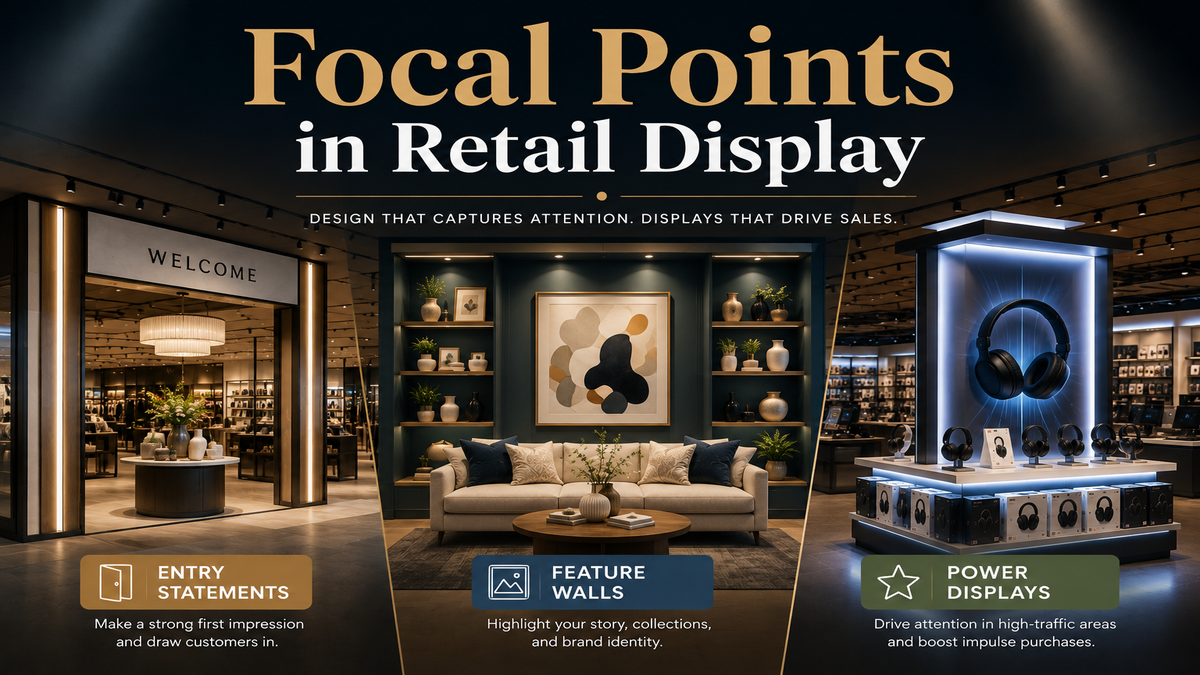
🚪 1. Entry Statements
The Entry Statement is the customer’s first visual experience after entering the store. Think of it as the store’s handshake—it immediately communicates what customers can expect.
Unlike a simple display near the entrance, an entry statement introduces the brand’s current story. It may highlight a new collection, seasonal campaign, bestselling products, or lifestyle inspiration.
Best Practices
- Keep displays clean and uncluttered.
- Feature only a few hero products.
- Use strong lighting to attract attention.
- Refresh displays regularly.
- Maintain clear sightlines into the store.
A powerful entry statement encourages customers to continue exploring rather than simply walking past.

🖼️ 2. Feature Walls
A Feature Wall is a vertical merchandising area designed to become a visual centerpiece. Instead of presenting products randomly, feature walls organize merchandise into attractive compositions that emphasize color, texture, or product collections.
Feature walls are excellent for:
- New arrivals
- Seasonal collections
- Limited editions
- Coordinated product families
- Brand storytelling
Retailers often combine shelving, graphics, lighting, and decorative elements to transform ordinary walls into engaging shopping destinations.
Why Feature Walls Work
- Maximize vertical space
- Improve product visibility
- Create strong visual impact
- Help customers understand product collections
- Increase perceived product value
A thoughtfully designed feature wall can instantly elevate the overall appearance of a retail environment.

⭐ 3. Power Displays
Power Displays are high-impact merchandising presentations positioned in areas with heavy customer traffic. Their purpose is to maximize visibility and encourage impulse purchases.
Common locations include:
- Main aisles
- Store intersections
- End caps
- Promotional islands
- Checkout areas
Unlike permanent fixtures, power displays change frequently to support promotions, product launches, holidays, or marketing campaigns.
Characteristics of Effective Power Displays
- Large visual presence
- Clear promotional message
- Easy product access
- Strong color contrast
- Minimal visual clutter
Because customers naturally pause at high-traffic locations, power displays significantly increase opportunities for product discovery.
🎨 Designing Effective Focal Points
Regardless of the display type, several design principles remain consistent.
Visual Hierarchy
Use differences in size, height, color, and lighting to establish clear priorities. Customers should instantly understand what deserves their attention first.
Balance
Arrange products in a way that feels visually stable. Both symmetrical and asymmetrical compositions can be effective when properly executed.
Contrast
Contrast draws attention through differences in color, texture, scale, or materials. It helps hero products stand out from surrounding merchandise.
Simplicity
Avoid overcrowding displays. Too many products compete for attention and reduce overall effectiveness.
Lighting
Lighting is one of the most powerful tools for creating focal points. Accent lighting highlights premium products while adding depth and atmosphere to the display.
📈 Benefits of Strong Focal Points
Well-designed focal points provide measurable advantages for retailers.
- Increase customer engagement
- Improve product visibility
- Support storytelling and branding
- Encourage impulse purchases
- Guide customer movement naturally
- Enhance the overall shopping experience
- Increase the perceived value of merchandise
When customers clearly understand where to look first, shopping becomes more enjoyable and intuitive.

🏪 Real-World Examples
Different retail sectors apply focal points in unique ways.
- Fashion boutiques often create dramatic entry statements featuring seasonal outfits and coordinated accessories.
- Home décor stores use feature walls to showcase complete room concepts with furniture, lighting, and decorative pieces.
- Electronics retailers rely on power displays to promote newly released products in high-traffic zones.
- Supermarkets position promotional islands and end-cap displays to increase impulse purchases.
- Luxury retailers use minimalist focal points where a single premium product becomes the center of attention.
Although each industry has its own merchandising strategy, the objective remains the same: guide attention toward the products that matter most.
💡 Final Thoughts
Focal points are the foundation of successful visual merchandising. Whether through an inviting Entry Statement, an inspiring Feature Wall, or a high-impact Power Display, these carefully designed areas help shape how customers experience a store.
The best retail environments don’t rely on displaying more products—they focus on presenting the right products in the right place. By combining thoughtful composition, strategic lighting, and compelling storytelling, retailers can create memorable shopping experiences that strengthen their brand and encourage higher sales.
When customers know exactly where to look first, they are more likely to stay longer, discover more, and leave with a positive impression of the store.
Leave a Reply