
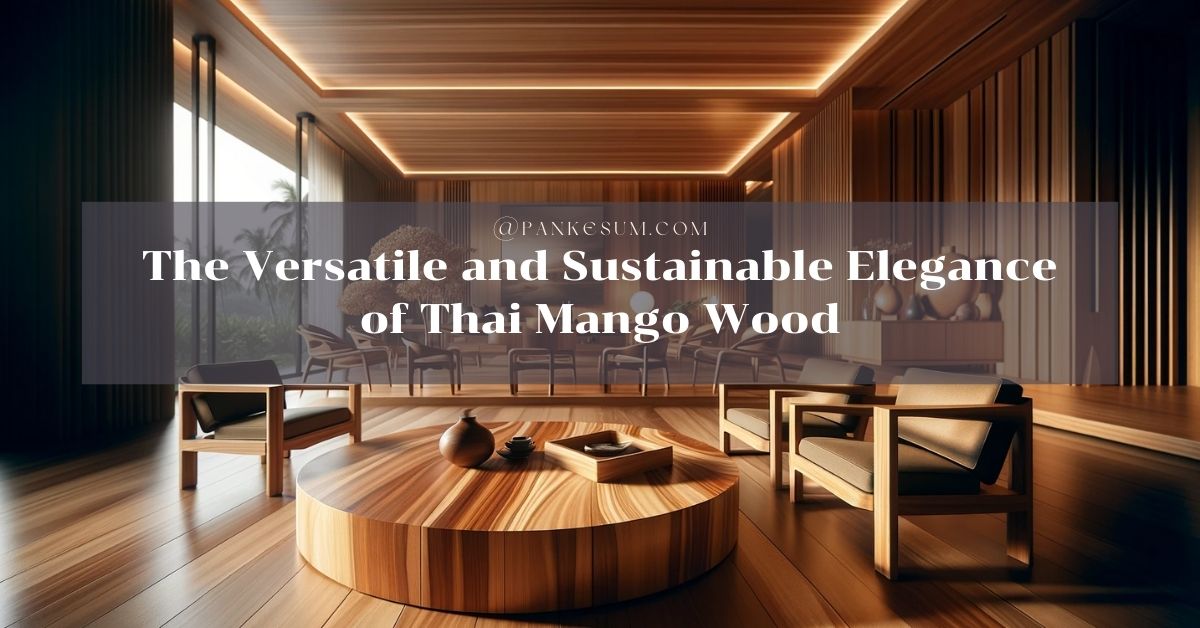
Exploring the Environmental and Economic Impact of Mango Wood in Thailand
Mango Wood: A Sustainable Resource
In Thailand, mango trees are not only celebrated for their delicious fruit but also revered for their contribution to the sustainable wood industry.
These trees thrive in the Thai climate, making them a renewable resource. The practice of using mango wood aligns with environmental conservation efforts, as the trees are harvested only after they complete their productive lifespan of 2-4 years as fruit-bearing plants.
This cycle of planting, harvesting, and replanting contributes to the sustainability of mango wood, making it an eco-friendly and affordable material.


Cultural Significance and Economic Impact
Beyond its environmental benefits, mango wood holds significant cultural and economic value in Thailand. Once their fruit-bearing period ends, these trees begin a new life in the hands of skilled Thai artisans.
The transformation of rough mango wood into fine housewares and furniture is a testament to the ingenuity and craftsmanship inherent in Thai culture. Products ranging from elegant vases and candlesticks to functional lamps and tableware showcase the versatility of this wood.
Additionally, the use of mango wood in furniture, favored for its ease of shaping and durability, has bolstered Thailand’s economy through a flourishing export market. Nations across the Middle East, Japan, and Europe have become major importers of these uniquely Thai products, further solidifying mango wood’s international appeal.

on Pexels.com

on Pexels.com

on Pexels.com
Mango Wood in Thai Life and Art
The story of mango wood extends beyond its economic and environmental aspects, touching the very essence of Thai life and culture. This humble tree, so deeply rooted in the everyday lives of the Thai people, symbolizes a blend of tradition and innovation.
The transformation from a fruit-bearing tree to a source of artistic and practical items represents the resourcefulness and cultural richness of Thailand. Mango wood is not just a material; it’s a bridge between the natural bounty of Thailand and its artistic expression, making it a truly magical element of Thai heritage.

In conclusion, Thai mango wood is more than just a material for crafting furniture and housewares. It embodies a sustainable approach to resource utilization, supports local economies, and carries the cultural essence of Thailand. Its story is one of transformation and versatility, mirroring the resilience and creativity of the Thai people.
Leave a Reply