
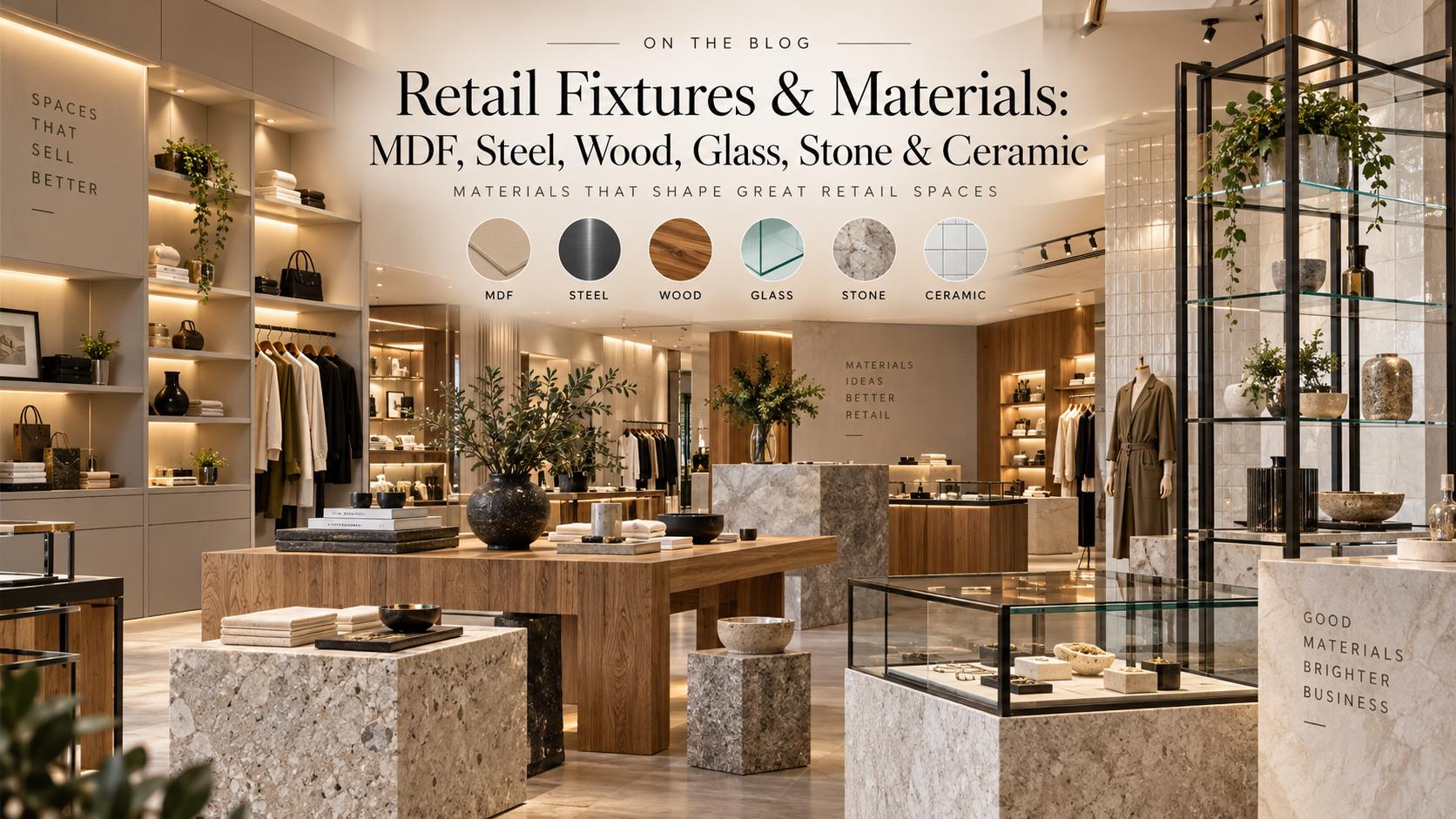
Retail fixtures do more than simply hold or display products. They also help shape the atmosphere of a store and influence how customers perceive the brand.
One of the most important factors in fixture design is material selection. Each material offers different benefits in terms of appearance, strength, weight, cost, and functionality.
MDF, steel, wood, glass, stone, and ceramic can all be used in retail fixtures, and many projects combine several materials to achieve the right balance between design and performance.

🪵 1. MDF: Flexible and Cost-Effective
MDF is commonly used for cabinets, shelving, counters, and decorative panels because of its smooth surface and ease of finishing.
It can be painted, laminated, veneered, or CNC-cut, making it suitable for fixtures that require consistent shapes and repeated production.
The main considerations are weight and moisture resistance, especially if edges or surfaces are not properly sealed.
Best used for: display cabinets, shelving, counters, wall panels, and plinths.

🛠️ 2. Steel: Strong and Modern
Steel is ideal for structural elements in retail fixtures because it offers high strength while allowing the overall design to remain slim and visually light.
It can also be finished in many ways, including powder coating, brushed metal, or blackened steel, depending on the desired look.
Steel works especially well with wood, glass, stone, and ceramic, making it a popular choice for mixed-material designs.
Best used for: shelving frames, display racks, table bases, garment rails, and modular fixtures.

🌿 3. Wood: Warm and Natural
Wood brings warmth, texture, and a natural character to retail spaces.
It is often used in lifestyle stores, homeware shops, hospitality spaces, restaurants, and premium retail environments.
Different wood species and finishes can create very different moods, from minimal and Scandinavian to rich and luxurious.
Because wood is a natural material, moisture, movement, and surface finishing should be considered during design and production.
Best used for: tables, shelving, display stands, cabinetry, and decorative panels.

✨ 4. Glass: Light and Product-Focused
Glass helps retail fixtures feel more open and visually lighter, allowing the merchandise to remain the main focus.
It is especially suitable for jewelry, cosmetics, accessories, and premium product displays.
Glass thickness, type, edge treatment, and structural support should all be carefully considered for safety and durability.
Best used for: display cases, glass shelves, cabinet doors, partitions, and tabletops.

🪨 5. Stone: Premium and Architectural
Natural stone such as marble, granite, limestone, and travertine can give retail fixtures a more premium and architectural appearance.
It is often used selectively on countertops, display bases, or tabletops to create a strong visual feature without making the entire fixture excessively heavy.
The main consideration is weight, along with the supporting structure, handling, and installation.
Best used for: countertops, display plinths, tabletops, and luxury displays.

🎨 6. Ceramic: Color, Texture, and Character
Ceramic is a great choice when a retail fixture needs more color, texture, pattern, or custom detail.
It can be used as tile, surface cladding, or as a custom ceramic component developed specifically for a brand or interior concept.
Ceramic also pairs well with wood, steel, and stone, helping create fixtures with more depth and personality.
Best used for: counter surfaces, display bases, tabletops, decorative panels, and branded details.
📌 How to Choose the Right Material for Retail Fixtures
| Material | Main Advantage | Key Consideration |
|---|---|---|
| MDF | Cost-effective and easy to customize | Moisture and weight |
| Steel | Strong and structurally efficient | Finish and corrosion protection |
| Wood | Natural and premium appearance | Moisture and material movement |
| Glass | Open and visually light | Safety and breakage |
| Stone | Premium and durable | Weight and handling |
| Ceramic | Rich in color and texture | Installation and impact resistance |


🔗 Combining Materials for Better Retail Fixtures
Retail fixtures do not need to rely on just one material.
Combining materials can improve both appearance and performance. For example:
- Steel + Wood for strength with a warmer look
- Steel + Glass for a clean and modern appearance
- Wood + Ceramic for texture and character
- Metal + Stone for a premium finish
- MDF + Steel for repeatable fixtures and efficient production
The best material combination depends on the design, budget, weight, intended use, and the type of retail space.
Choosing the right materials early in the design process can help create retail fixtures that are better balanced in terms of appearance, function, and durability.
Leave a Reply