
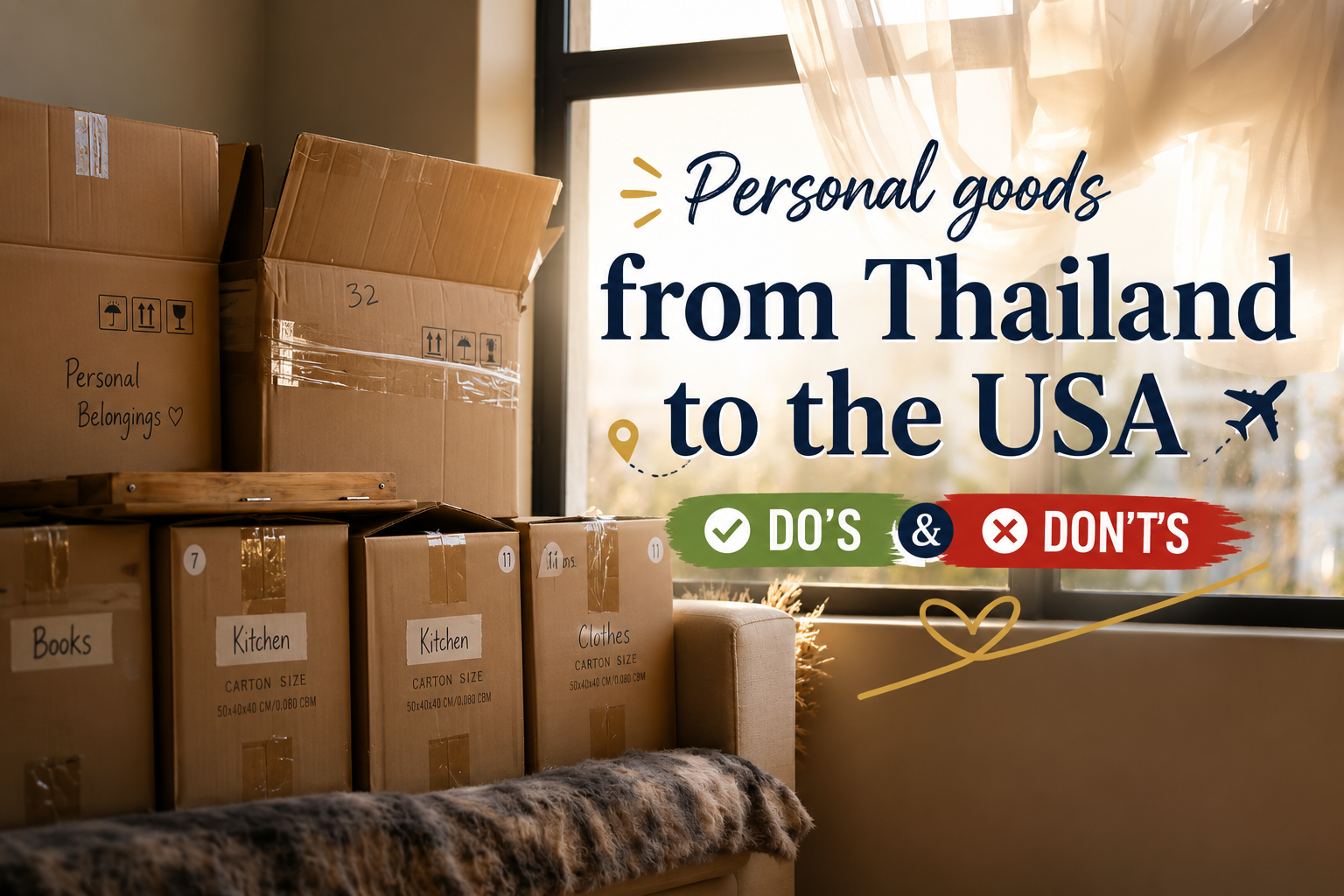
Shipping personal belongings from Thailand to the United States may seem straightforward, but certain items are subject to import regulations and customs inspections. Proper preparation can help prevent delays, unexpected fees, or shipment rejection.
Whether you’re relocating, sending gifts to family, or shipping household items, here are the essential do’s and don’ts to keep in mind.
✅ DO
- Accurately Describe Your Shipment
Always provide a clear description of the items you are shipping, such as:
- Used Clothing
- Personal Books
- Kitchenware
- Ceramic Tableware
- Home Decorations
Avoid using vague descriptions like “Gift” or “Personal Goods” only.
2. Pack Your Items Properly
International shipments go through multiple handling points.
Use:
- Double-wall cartons
- Bubble wrap
- Cushioning materials
- Corner protectors
Fragile items such as ceramics should receive extra protection.
3. Provide Complete Recipient Information
4. Check Whether Your Items Require Additional Documentation
Certain products are regulated before entering the United States, including:
- Food
- Cosmetics
- Medicines
- Dietary supplements
- Seeds
- Plants
Additional registrations or import documentation may be required.
5. Prepare a Detailed Packing List
A complete packing list helps customs officers identify your shipment more efficiently and supports insurance claims if needed.
❌ DON’T
1. Don’t Understate the Shipment Value
Declaring a lower value to reduce duties may result in customs issues and could also reduce insurance coverage if your shipment is lost or damaged.
2. Don’t Ship Fresh or Perishable Food
Avoid sending:
- Fresh fruit
- Fresh vegetables
- Meat
- Seafood
- Fresh plants
These products are heavily regulated and often restricted.
3. Don’t Ship Dangerous Goods Without Disclosure
Examples include:
- Aerosol cans
- High-alcohol perfumes
- Paint
- Certain lithium batteries
These items may be classified as Dangerous Goods (DG).
4. Don’t Reuse Boxes with Old Shipping Labels
Remove all previous:
- Shipping labels
- Tracking barcodes
- Destination stickers
This helps prevent sorting errors during transit.
5. Don’t Ship Prohibited Items
Examples include:
- Illegal drugs
- Weapons
- Counterfeit goods
- Protected wildlife products
- Certain hazardous materials
Common Personal Items for Shipping
✔ Clothing
✔ Books
✔ Kitchenware
✔ Ceramic Tableware
✔ Home Decor
✔ Toys
✔ Household Goods
✔ Personal Belongings
Shipping Tips
Proper packing, accurate documentation, and checking import requirements in advance can help your shipment arrive smoothly and avoid unnecessary delays or costs. If you’re unsure whether your items require additional documentation, consult your shipping provider before sending your package.
Leave a Reply